Branded Residences: The Format Redefining Luxury in Marbella
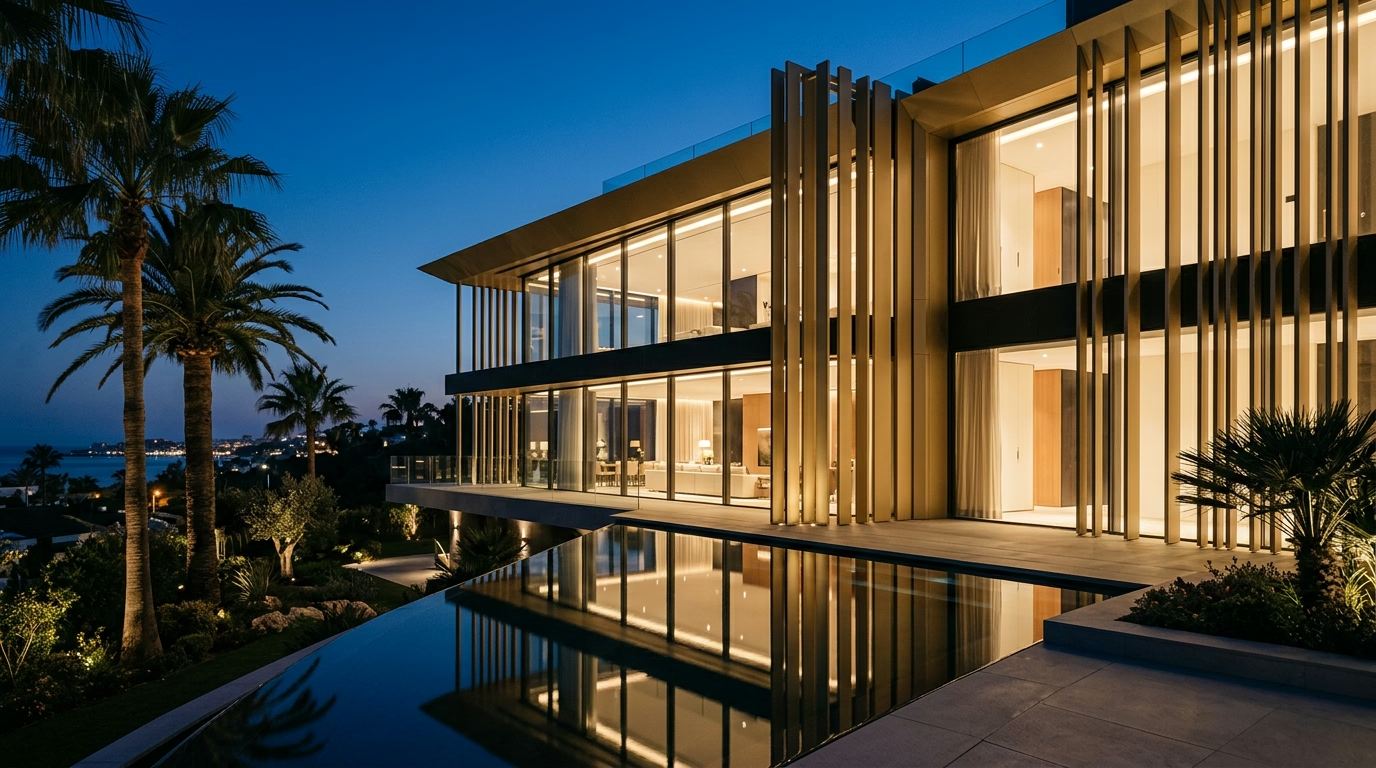
Marbella's residential architecture has ceased to be a mere design exercise to become an extension of global brand equity. In 2026, the Costa del Sol consolidates itself not only as a sun and golf destination but as a European hub for couture living. The emergence of projects sponsored by firms such as Dolce & Gabbana, Fendi Casa, and Karl Lagerfeld has introduced a new metric in real estate valuation: the Brand Premium, fundamentally altering profitability expectations on the Golden Mile.
The couture living ecosystem: beyond the name
The branded residences phenomenon is not simply about licensing a logo onto a block of luxury apartments. In Marbella's hyper-competitive ecosystem, it represents a comprehensive curation of lifestyle. Landmark projects such as Design Hills by Dolce & Gabbana or EPIC Marbella (furnished by Fendi Casa) offer closed ecosystems that guarantee a non-negotiable standard of quality and service.
For the international buyer, often resident in multiple jurisdictions, the brand acts as a proxy for trust. It guarantees a level of maintenance, security, and concierge services comparable to five-star hospitality, enabling the highly desired lock-and-leave model. This operational certainty is precisely what justifies the drastic upward deviation in prices per square metre compared to conventional new builds.
Profitability and the Brand Premium in figures
The intersection between high fashion and real estate has proven to be one of the most resilient asset classes. The most recent market reports corresponding to the spring of 2026 indicate that branded residences in the Marbella–Benahavís–Estepona triangle command a price premium ranging between 15% and 35% compared to non-branded luxury properties.
In ultra-prime enclaves of the Golden Mile, these properties transact in ranges from €16,000 to over €20,000 per square metre. Despite this aggressive entry point, underlying profitability remains robust. Net operating yields (hyper-premium short and medium-term rentals) stabilise in the 4% to 6% bracket, sustained by tenants operating outside the price-sensitive ecosystem who demand brand exclusivity.
A liquidity haven compared to traditional new builds
From a wealth management perspective, the most critical competitive advantage of branded residences is their liquidity in secondary markets. An apartment bearing the Karl Lagerfeld or Lamborghini seal transcends the local Andalusian market to access a truly global demand pool.
In 2026, with a pipeline of new projects severely limited by the scarcity of prime land in Marbella, already consolidated branded assets behave like Veblen goods: their demand increases in parallel with their price. For Family Offices and private funds, this segment represents a hedge against inflation, combining the passive appreciation of a trophy asset with a management infrastructure that eliminates the traditional operational friction of real estate.
“Branded residences have transformed bricks into a global luxury consumer good. Today, an apartment on the Golden Mile is bought and liquidated with the same transnational fluidity as a high-end timepiece.”
Sources consulted
- European Branded Residences Report 2026 — Knight FrankKnight Frank Research
- Marbella Market Report 2024-2025 — DM PropertiesDM Properties Marbella
- Design Hills by Dolce & Gabbana — projectSierra Blanca Estates
- EPIC Marbella by Fendi CasaSierra Blanca Estates
- Engel & Völkers Market Report Marbella 2025Engel & Völkers